

About Cava
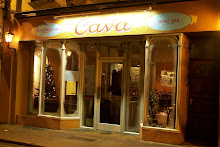
- Cava
- Galway, Ireland
- Cava opened in May 2008. It is the only Spanish Restaurant in Galway. It serves Tapas,á la carte, Lunch and brunch and is opened 7 days a week. It is said to have the best Tapas in Ireland and its all Spanish Wine and beer menu is the largest in Ireland.
Wednesday, February 2, 2011


Tuesday, February 1, 2011
Monday, January 31, 2011
Thursday, January 27, 2011
Friday, December 3, 2010
G is for Gazpacho
Gazpacho is a cold Spanish tomato-based raw vegetable soup, originating in the southern region of Andalusia. Gazpacho is widely consumed throughout Spain, neighboring Portugal (where it is known as gaspacho) and parts of Latin America. Gazpacho is mostly consumed during the summer months, due to its cold temperature and acidic bite.
Gazpacho has ancient roots. There are a number of theories of its origin, including as an Arab soup of bread, olive oil, water and garlic that arrived in Spain with the Moors, or via the Romans with the addition of vinegar.
Once in Spain it became a part of Andalusian cuisine, particularly Seville, using stale bread, garlic, olive oil, salt, and vinegar, similar to ajoblanco.
Gazpacho remained popular with field hands as a way to cool off during the summer and to use available ingredients such as fresh vegetables and stale bread.

There are many modern variations of gazpacho, often in different colors and omitting the tomatoes and bread in favor of avocados, cucumbers, parsley, watermelon, grapes, meat stock, seafood, and other ingredients, such as strawberries or beetroot.
Gazpacho has become an almost generic term for chilled vegetable soup.
In Andalusia, most gazpacho recipes typically include stale bread, tomato, cucumber, bell pepper, garlic, olive oil, wine vinegar, and salt. Some may also include onion.

The following is Cava's method of preparing gazpacho:

Gazpacho, along with tortilla and Serrano ham are three of the most traditional tapas available in Cava.
Gazpacho has ancient roots. There are a number of theories of its origin, including as an Arab soup of bread, olive oil, water and garlic that arrived in Spain with the Moors, or via the Romans with the addition of vinegar.
Once in Spain it became a part of Andalusian cuisine, particularly Seville, using stale bread, garlic, olive oil, salt, and vinegar, similar to ajoblanco.
Gazpacho remained popular with field hands as a way to cool off during the summer and to use available ingredients such as fresh vegetables and stale bread.

There are many modern variations of gazpacho, often in different colors and omitting the tomatoes and bread in favor of avocados, cucumbers, parsley, watermelon, grapes, meat stock, seafood, and other ingredients, such as strawberries or beetroot.
Gazpacho has become an almost generic term for chilled vegetable soup.
In Andalusia, most gazpacho recipes typically include stale bread, tomato, cucumber, bell pepper, garlic, olive oil, wine vinegar, and salt. Some may also include onion.

The following is Cava's method of preparing gazpacho:
- Wash 10 vine tomatoes, 1 cucumber, 1 red and 1 green pepper.
- Peel 2 cloves of garlic and 1 onion, and take half the skin of the cucumber.
- Put all the vegetables into food processor.
- Soak 200g of stale bread with 100ml olive oil and 50ml of sherry vinegar.
- Add chilled water until you get a smooth soup-like consistency.
- Add salt and pepper to taste.
- Chill soup overnight and serve cold the next day.

Gazpacho, along with tortilla and Serrano ham are three of the most traditional tapas available in Cava.
Wednesday, December 1, 2010
F is for Flamenco
Flamenco is the traditional song and dance of the Gypsies (flamencos) of Andalusia.
Its history can be traced over several centuries from Gypsy, Moorish, Andalucian, and other roots.
Its evolution is a source of great debate with no accepted explanation of how flamenco resulted from the cultural influences of such diverse regions as North Africa, Southern Europe and the Near and Far East.
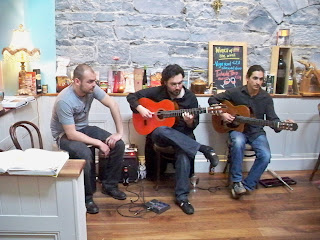
Flamenco music and dance became popular in the early 19th century as café entertainment. Also, in the 19th century, guitar accompaniment became common for many genres, and guitar solos also developed. In the 20th century, commercial pressure distorted much traditional flamenco dance.

Its history can be traced over several centuries from Gypsy, Moorish, Andalucian, and other roots.
Its evolution is a source of great debate with no accepted explanation of how flamenco resulted from the cultural influences of such diverse regions as North Africa, Southern Europe and the Near and Far East.

Flamenco music and dance became popular in the early 19th century as café entertainment. Also, in the 19th century, guitar accompaniment became common for many genres, and guitar solos also developed. In the 20th century, commercial pressure distorted much traditional flamenco dance.
Canto (“song”) is the core of flamenco, and like baile (“dance”), it has three forms: grande or hondo duende, the transformation of the musician by the depth of the emotion; intermedio (“intermediate”), moderately serious, the music sometimes Oriental-sounding; and pequeño (“small”), light songs of exuberance, love, and nature. (“grand” or “deep”), intense, profound songs, tragic in tone, and imbued with
Individual genres include the light bulerías; the more serious soleares and its lighter descendant, the alegrías; the fandangos grandes, a serious adaptation of a lighter non-Gypsy genre; the malagueñas, an offshoot of the fandangos; and cantos grandes such as the siguiriyas gitanas and saetas.

Both text and melody of these songs, like the flamenco dance, are improvised within traditional structures such as characteristic rhythms and chords. Zapateado, intricate toe- and heel-clicking steps, characterizes the men's dance; the traditional women's dance is based more on grace of body and hand movement.
The baile grande, especially, is believed to retain elements of the dance of India, where the Gypsies originated. Castanets, found in Andalusian dance, are not traditional to flamenco. Song and dance may be accompanied by jaleo, rhythmic finger snapping, hand clapping, and shouting.
Flamenco has never been more popular in Spain and abroad than it is today with a new generation of new flamenco performers in the post-Franco era who have broadened flamenco's appeal to an international audience.
Flamenco guitar music is on in Cava, every Saturday night, 7pm to 9pm.
Sunday, November 28, 2010
E is for Extremadura
Extremadura is an autonomous community of western Spain whose capital city is Mérida. It borders Portugal to the west, and it is an important area for wildlife, particularity the Iberian Pig.
Extremadura is built upon the foundations of roman settlements. Mérida became the capital of the Roman Lusitania province, and one of the most important cities in the Roman Empire.
To the north, Extremadura borders Castile and León (provinces of Salamanca); to the south, it borders Andalusia (provinces such as Seville); and to the east, it borders Castile-La Mancha (provinces of Toledo).
The climate of Extremadura is Mediterranean, except to the north, where it is continentalized, and to the west, where the influence of the Atlantic makes the climate milder. In general, it is characterized by its very hot and dry summers, with great droughts, and its long and mild winters due to the oceanic influence because of its proximity to the Atlantic coast of Portugal.
The only language that is officially recognized is Spanish, but other languages are also spoken, such as Portuguese.
Wild Black Iberian pigs roam in the area and consume acorns from oak groves. These pigs are caught and used for the cured ham dish jamón ibérico. (We have this in the restaurant) The higher the percentage of acorns eaten by the pigs, the more valuable (and expensive) the ham. Iberian Ham that can boast an acorn-fed average of 90%+ (of the pigs' diet) can be sold for more than twice as much as ham whose pigs ate on average less than 70% of acorns, for example.

Extremadura is known for the different ways of preparing the Iberian pork. The main characteristics of the traditional Extremaduran cuisine were its simplicity, its lack of clutter and its low cost. It is also a cuisine reflecting a generous spirit, for many of its preparations used to be cooked in large pots to share with visitors, friends and neighbours. The resulting dishes are eaten with local bread. The preferred spices in Extremaduran cuisine are garlic, bay leaves and anise. Olive oil is used for frying and as an ingredient in many dishes.
The most famous dishes of Extremadura are the cocido extremeño, the potaje de garbanzos y judías blancas (chick pea and bean soup), the sopa blanca de ajos (white garlic soup), the potaje de castañas secas (chestnut soup), the olla con "asaura" (a stew with offal and blood), the Ajoblanco extremeño and the gazpacho extremeño (a variant of gazpacho with ham).
Key Grape Varieties:
Red: Bobal, Monastrell, Tempranillo, Garnacha, Merlot, Syrah and Cabernet Sauvignon
White: Chardonnay, Viura, Verdejo and Pedro Ximénez.
Extremadura is built upon the foundations of roman settlements. Mérida became the capital of the Roman Lusitania province, and one of the most important cities in the Roman Empire.
To the north, Extremadura borders Castile and León (provinces of Salamanca); to the south, it borders Andalusia (provinces such as Seville); and to the east, it borders Castile-La Mancha (provinces of Toledo).
The climate of Extremadura is Mediterranean, except to the north, where it is continentalized, and to the west, where the influence of the Atlantic makes the climate milder. In general, it is characterized by its very hot and dry summers, with great droughts, and its long and mild winters due to the oceanic influence because of its proximity to the Atlantic coast of Portugal.
The only language that is officially recognized is Spanish, but other languages are also spoken, such as Portuguese.
Wild Black Iberian pigs roam in the area and consume acorns from oak groves. These pigs are caught and used for the cured ham dish jamón ibérico. (We have this in the restaurant) The higher the percentage of acorns eaten by the pigs, the more valuable (and expensive) the ham. Iberian Ham that can boast an acorn-fed average of 90%+ (of the pigs' diet) can be sold for more than twice as much as ham whose pigs ate on average less than 70% of acorns, for example.

Extremadura is known for the different ways of preparing the Iberian pork. The main characteristics of the traditional Extremaduran cuisine were its simplicity, its lack of clutter and its low cost. It is also a cuisine reflecting a generous spirit, for many of its preparations used to be cooked in large pots to share with visitors, friends and neighbours. The resulting dishes are eaten with local bread. The preferred spices in Extremaduran cuisine are garlic, bay leaves and anise. Olive oil is used for frying and as an ingredient in many dishes.
The most famous dishes of Extremadura are the cocido extremeño, the potaje de garbanzos y judías blancas (chick pea and bean soup), the sopa blanca de ajos (white garlic soup), the potaje de castañas secas (chestnut soup), the olla con "asaura" (a stew with offal and blood), the Ajoblanco extremeño and the gazpacho extremeño (a variant of gazpacho with ham).
Key Grape Varieties:
Red: Bobal, Monastrell, Tempranillo, Garnacha, Merlot, Syrah and Cabernet Sauvignon
White: Chardonnay, Viura, Verdejo and Pedro Ximénez.
Wednesday, November 3, 2010
D is for Denominación de Origen
Denominación de Origen (Designation of Origin - DO) is part of a regulatory classification system primarily for Spanish wines (similar to the French appellations). In wines it parallels the hierarchical system of France (1935) and Italy (1963), although Rioja (1925) and Sherry (1933) preceded the full system. For wines, it performs a role regulating the quality and geographical origin of the wine, ensuring that the that its method of production adn the final product are of a good standard.
 Denominación de Pago (DO de Pago): Individual single-estates with an international reputation.
Denominación de Origen Calificada (DOCa/DOQ): Top-quality wine regions.
Denominación de Origen (DO): mainstream quality-wine regions.
Vino de Calidad Producido en Región Determinada (VCPRD): Less stringent regulation with specific geographical origin.
Vinos de la Tierra (VdlT): "country wine" areas which may use a regional name.
Vino de Mesa - Table wine, production of which has been in decline in recent years.
Most of the wine in Cava are DO status, but all the wines from Rioja and Priorat that we have in the restaurant are DOCa. We also have some amazing Vinos de la Tierra, from Mallorca which are just as expensive as the ones from Rioja. There is alot of politics behind the Denominación de Origen. It is not only about mataining quality but also about promoting certain regions as the best, for example Rioja.

This bottle will set you back about €60 in Spain, which means if you did get it in Ireland you may be looking at lot more due to transport, excise duty, and Vat.

Sunday, October 17, 2010
C is for Chorizo

There are hundreds of regional varieties of Spanish chorizo, both smoked and unsmoked, which may contain garlic, herbs and other ingredients. Chorizo comes in short, long, hard and soft varieties, some of which are suited to being eaten as an appetizer or tapas, whereas others are better suited to cooking.
Leaner varieties are typically better suited to tapas, eaten at room temperature, whereas fattier versions are generally used for cooking. A general rule of thumb is that long, thin chorizos are sweeter and short chorizos are spicy, although this is not always the case.
As well as chorizo, Spain also produces lomo and salchichón, cured and air dried in a similar way. Lomo is a lean cured meat to slice, made from the loin of the pig, which is marinated and then air-dried. Salchichón is another cured sausage without the pimentón seasoning of chorizo, but flavoured with black peppercorns instead.
In Cava, we have two varieties of Chorizo, cured and raw, and a Salchichón and Lomo.
If you order our cheese and meat platter you can try at least four different types of cured meat!
Tuesday, August 24, 2010
B is for Bacalao
 |
| Salting cod in the 19th century |
 |
| Salted cod for sale |
- Bacalao is fresh cod loin which has been salted in order that it be preserved. The tradition of making bacalao dates back many centuries and is in no way particular to the Spanish, though it is an essential ingredient for Basque cuisine.
- Salt cod is also produced in Canada, Iceland, and Norway, and has been for over 500 years. It forms a traditional ingredient of the cuisine of many countries around the Atlantic. Traditionally, salt cod was dried only by the wind and the sun, hanging on wooden scaffolding or lying on clean cliffs or rocks near the seaside.
- The drying of food is the world's oldest known preservation method, and dried fish has a storage life of several years. The method was cheap, the work could be done by the fisherman or his family, and the resulting product was easily transported to market. Salting became economically feasible during the 17th century, when cheap salt from southern Europe became available to the maritime nations of northern Europe.
- Nowadays, in Spain, you can buy bacalao in the supermarket. In order to use it, you must soak it in water for at least 24 hours, changing the water periodically.
- Salted cod goes really well with roast tomatoes, chickpeas, and many leaves, including rocket.
- The best way to cook it ti to place it in cold water and bring it to the boil. Once the fish is entirely opaque it is ready. This does not take long.
- In Andalusia, there is a wonderful salad of salted cod, oranges, and walnut. We serve this in Cava at the moment.
- Perhaps most famously, Bacalao is used to made salted cod cakes, called Buñuelos de bacalao in Spanish These have been on the menu in Cava since we opened and will presumably be there for a long time to come.
 |
| Buñuelos de bacalao |
Friday, August 20, 2010
A is for Albariño
Albariño is a variety of white wine grape grown in Galicia (northwest Spain) where it is used to make varietal and blended white wines.
It was presumably brought to Iberia by Cluny monks in the twelfth century. Its name "Alba-Riño" means "the white [wine] from the Rhine" and it has locally been thought to be a Riesling clone originating from the Alsace region of France, although earliest known records of Riesling as a grape variety date from the 15th, rather than the 12th, century. It is also theorized that the grape is a close relative of the French grape Petit Manseng.
Spain produces Albariño to a significant degree in the Rías Baixas DO, especially in the town of Cambados. In other locations such as Ribeiro, Lima, Braga or Valdeorras it is often mixed with other grapes such as Godello, to produce blended wines. Such blends were common throughout Galicia too until about 1985; when the Rías Baixas DO was established on an experimental basis in 1986, Albariño began to emerge as a varietal, both locally and international. Its recent emergence as a varietal led the wines to be for wine drinkers who wanted clean flavors and rich, ripe fruit". This has led to wines completely different from those produced across the river in Portugal.

The grape is noted for its distinctive aroma, very similar to that of Viognier and Gewurztraminer, suggesting apricot and peach. The wine produced is unusually light, and generally high in acidity with alcohol levels of 11.5–12.5%. Its thick skins and large number of pips can cause residual bitterness.

At Cava, we have a number of Albariño's, the most famous of which is the Albariño Castro Martin. It will sent you back about €40. Because of its more complex character, Albariño goes well with food, especially fish and chicken and pork. Why not try with our free range pork next time you're in.
Jp
It was presumably brought to Iberia by Cluny monks in the twelfth century. Its name "Alba-Riño" means "the white [wine] from the Rhine" and it has locally been thought to be a Riesling clone originating from the Alsace region of France, although earliest known records of Riesling as a grape variety date from the 15th, rather than the 12th, century. It is also theorized that the grape is a close relative of the French grape Petit Manseng.
Spain produces Albariño to a significant degree in the Rías Baixas DO, especially in the town of Cambados. In other locations such as Ribeiro, Lima, Braga or Valdeorras it is often mixed with other grapes such as Godello, to produce blended wines. Such blends were common throughout Galicia too until about 1985; when the Rías Baixas DO was established on an experimental basis in 1986, Albariño began to emerge as a varietal, both locally and international. Its recent emergence as a varietal led the wines to be for wine drinkers who wanted clean flavors and rich, ripe fruit". This has led to wines completely different from those produced across the river in Portugal.

The grape is noted for its distinctive aroma, very similar to that of Viognier and Gewurztraminer, suggesting apricot and peach. The wine produced is unusually light, and generally high in acidity with alcohol levels of 11.5–12.5%. Its thick skins and large number of pips can cause residual bitterness.

At Cava, we have a number of Albariño's, the most famous of which is the Albariño Castro Martin. It will sent you back about €40. Because of its more complex character, Albariño goes well with food, especially fish and chicken and pork. Why not try with our free range pork next time you're in.
Jp
Saturday, July 24, 2010
On Sherry
Sherry is a fortified wine made from white grapes that are grown near the town of Jerez, Spain. The word "sherry" is an anglicization of Jerez. In earlier times, sherry was known as sack (from the Spanish saca, meaning "a removal from the solera"). In the European Union "sherry" is a protected designation of origin; therefore, all wine labeled as "sherry" must legally come from the Sherry Triangle, which is an area in the province of Cádiz between Jerez de la Frontera, Sanlúcar de Barrameda, and El Puerto de Santa María.

After fermentation is complete, sherry is fortified with brandy. Because the fortification takes place after fermentation, most sherries are initially dry, with any sweetness being added later. In contrast, port wine (for example) is fortified halfway through its fermentation, which stops the process so that not all of the sugar is turned into alcohol.
Sherry is produced in a variety of styles, ranging from dry, light versions such as finos to much darker and sometimes sweeter versions known as olorosos.

After fermentation is complete, sherry is fortified with brandy. Because the fortification takes place after fermentation, most sherries are initially dry, with any sweetness being added later. In contrast, port wine (for example) is fortified halfway through its fermentation, which stops the process so that not all of the sugar is turned into alcohol.
Sherry is produced in a variety of styles, ranging from dry, light versions such as finos to much darker and sometimes sweeter versions known as olorosos.
Tuesday, June 15, 2010
On Chorizo
Spanish chorizo is made from coarsely chopped pork and pork fat, seasoned with smoked pimentón (paprika) and salt. It is generally classed as either picante (spicy) or dulce (sweet), depending upon the type of smoked paprika used.
There are hundreds of regional varieties of Spanish chorizo, both smoked and unsmoked, which may contain garlic, herbs and other ingredients. Chorizo comes in short, long, hard and soft varieties, some of which are suited to being eaten as an appetizer or tapas, whereas others are better suited to cooking.
Leaner varieties are typically better suited to tapas, eaten at room temperature, whereas fattier versions are generally used for cooking. A general rule of thumb is that long, thin chorizos are sweeter and short chorizos are spicy, although this is not always the case.
As well as chorizo, Spain also produces lomo and salchichón, cured and air dried in a similar way. Lomo is a lean cured meat to slice, made from the loin of the pig, which is marinated and then air-dried. Salchichón is another cured sausage without the pimentón seasoning of chorizo, but flavoured with black peppercorns instead.
There are hundreds of regional varieties of Spanish chorizo, both smoked and unsmoked, which may contain garlic, herbs and other ingredients. Chorizo comes in short, long, hard and soft varieties, some of which are suited to being eaten as an appetizer or tapas, whereas others are better suited to cooking.
Leaner varieties are typically better suited to tapas, eaten at room temperature, whereas fattier versions are generally used for cooking. A general rule of thumb is that long, thin chorizos are sweeter and short chorizos are spicy, although this is not always the case.
As well as chorizo, Spain also produces lomo and salchichón, cured and air dried in a similar way. Lomo is a lean cured meat to slice, made from the loin of the pig, which is marinated and then air-dried. Salchichón is another cured sausage without the pimentón seasoning of chorizo, but flavoured with black peppercorns instead.
Friday, June 4, 2010
New Menu Lauched
We launched our new menu on Wednesday and it seems to be well received. Although we were short a few items we went ahead with it anyway. The soft launch proved the better one, as by Thursday all was going smoothly with the new Tapas. The Basque style Monkfish, Rack of Pork with Sherry marmalade, and the Spring Lamb Shoulder with honey aoili are all selling well. All of these Tapas are slightly larger than most and would probably feed two if required.
Full house tonight, so better go!
Jp
Full house tonight, so better go!
Jp
Friday, May 28, 2010
Nearly June
Just a few short words before May ends and June begins. The restaurant is heating up with a bigger influx of diners so I hope this continues. Spring Lamb is all about and ours is coming from both Collerans Butchers in Galway and Castlemine Free range farm in Roscommon. Both are very good butchers and supply stuff to both Sheridans on the docks and Bar 8 (two other fine establishments in my eyes).
While asparagus is heading out of season, beetroot is coming in so expect a nice lamb and beetrot recipe is the coming days on the website.
Also, with Ireland not in the World Cup, Cava will be behind Spain all the way: so bring on the 16th when Spain open to Honduras. Hopefully its an excellent and colourful World Cup.
Finally: the Cooking classes are going strong and with our first publication (a little cookbook) included in the class, they really are a fine way to learn about food, Spain, and the catering Industry.
Until next time,
Jp
While asparagus is heading out of season, beetroot is coming in so expect a nice lamb and beetrot recipe is the coming days on the website.
Also, with Ireland not in the World Cup, Cava will be behind Spain all the way: so bring on the 16th when Spain open to Honduras. Hopefully its an excellent and colourful World Cup.
Finally: the Cooking classes are going strong and with our first publication (a little cookbook) included in the class, they really are a fine way to learn about food, Spain, and the catering Industry.
Until next time,
Jp
Friday, May 14, 2010
On May in the middle
Well May is in the middle of the month and the tapas are tipping away tip tip and everyday you're up and down to the kitchen and you do the orders and you think about it all from the local to the organic to the carrots in the corner which come from Israel and you wonder why they're here and how they got here and you make a note to try and look out for the Irish things but we all have to keep the world going and then you have a look through your book and write a few specials and then that's your day the restaurant opens and the phone rings and then you cook and serve and make it all or all you can make and you continue through the day knowing how much you've left out because you always leave out so much o you know how much I've left out six seconds of the last few moments and the music play and you make a tapa or two and think of your child ah sure isn't she only great and the things that can go wrong might go wrong just keep cooking and answering those calls even if they're only advertising and they want your money but sure isn't it all about that always about that someone getting someones money and making a tapa or two a tapa or two and then we're gone again gone again and then back again in no time no time at all.
Subscribe to:
Posts (Atom)